
By Victor Seet, ICF (PCC, ACTC). The world's only coach to hold both the Gallup Gold and Platinum Certified CliftonStrengths Coach awards and also a Newfield Certified ontological coach. Based in Singapore.
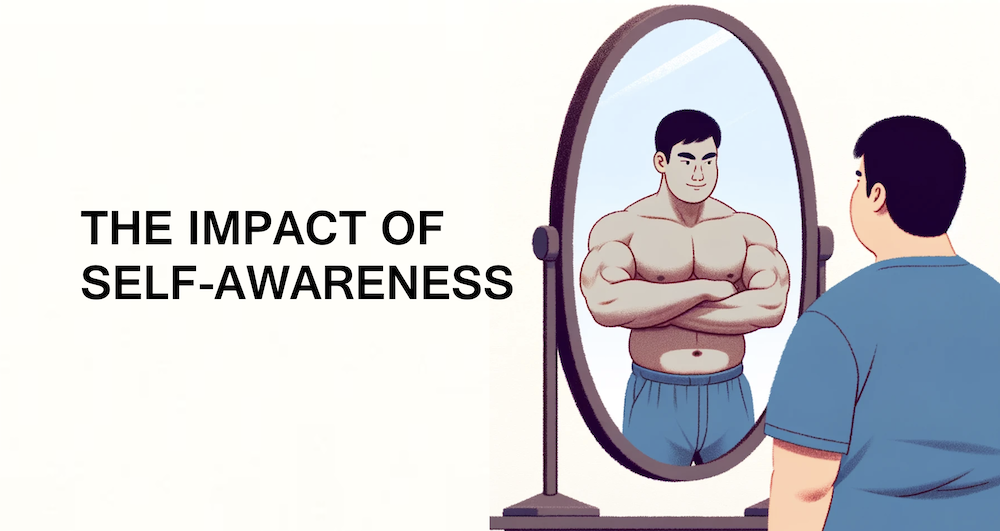
Have you been in conversations criticizing leaders and team members who seemed to have low self awareness? Have you wondered, even for a moment, if you could be a conversation topic among your colleagues?
It is a humbling question to sit with. And one worth sitting with.
What is the impact if you are a poor observer of yourself?
In ontological coaching, we speak of the observer. An observer is a person who sees the world in a particular way, shaped by his history, language, beliefs, and emotions. The challenge is that we cannot see our own observer directly. We can only notice the results it produces. And when those results are causing friction, in our relationships, our teams, our families, it usually means there is a blindspot at work.
Consider some of these possibilities when you are a poor observer of self:
▶ You project your anger / insecurities on others
What you cannot hold internally, you externalise. The frustration you carry from one conversation bleeds into the next. The insecurity you haven't examined shows up as criticism of others. You are responding to something inside yourself, but it looks to everyone around you like it is about them.
▶ You believe that people must be able to see your point of view and you name it as common sense
What feels obvious to you is the product of your unique history, values, and interpretations rather than not universal truth. When you mistake your perspective for common sense, you stop being curious. You stop listening. And the people around you learn to stop sharing.
▶ You believe you show up with the same level of performance daily and ignore the impact of your moods and emotions
Our emotional state is not a backdrop. It shapes everything: the quality of our listening, the sharpness of our thinking, the tone we set for others. When we are not aware of the mood we are in, we are not in charge of the impact we are having. We become, in a sense, weather that happens to other people.
▶ You expect people to live out standards that you yourself cannot meet
This gap between what we demand of others and what we practice ourselves is rarely conscious. It is not hypocrisy in the deliberate sense. It usually is a blindspot. We hold others to a version of ourselves that exists only in our intentions, not our actions.
▶ You say “Yes” to one thing without knowing that decision means saying many “No” to other things and vice versa
Every commitment is a declaration about what matters. But if we are not aware of our own values and priorities, we make commitments reactively and then wonder why we feel stretched thin, resentful, or inconsistent. Our "Yes" and "No" are more revealing than we realise.
▶ You have a strong opinion that you put forth as a truth, not knowing that your opinion says more about who you are than the matter itself
Our opinions are never just about the subject at hand. They reflect our assumptions, our fears, our identity. When we present our interpretations as facts, we close the door to learning — and we often damage trust without knowing it.
The above six statements are part of a coaching resource on uncovering blindspots. These are common observations drawn from more than a thousand hours of coaching practice as an ontological coach - patterns I have witnessed across teams, leadership levels and life stages.
So why is Self-Awareness so important?
👉🏻You can’t change what you don’t see👈🏻
One of the most transformational experiences available to any of us is to notice the way we see the world - to "take a look at how we look at things." In ontological coaching, this step is critical. It is not about acquiring new information. It is about seeing, perhaps for the first time, the lens through which all our information has been filtered.
When we start to “take a look at how we look at things”, a shift usually happens and it is usually not intellectual. We start to see something deeper and wider. The grip of certainty loosens. The narrative of "this is just what usually happens" reveals itself as one interpretation among many. And in that space, new action becomes possible.
This is why self-awareness is not a soft skill. It is a foundational capacity. Without it, every new tool, framework, or strategy gets applied through the same old lens and, produces the same old results.
We need more love, kindness, and compassion in this world. And we also need the self-awareness that makes those things sustainable, not just as values we espouse, but as ways of being we can actually inhabit.
We need leaders who realized how they are showing up in their teams. We need parents and partners who can notice when their own unexamined moods are shaping the atmosphere at home. We need more consciousness in our families, our workplaces, and ourselves.
My hope is this article will create some curiosity for yourself - what might be your blindspots?
Not as a self-critical exercise but as an act of care. For the people you lead. For the people you love. For the life you are building.
We invest in experiences that enrich our lives. These can be traveling, food, adventure, learning etc. These are all worthwhile. Coaching is also an experience and one that can change not just what you do, but who you are being as you do it. It is an investment in yourself that extends into every relationship and every room you walk into.
If something in this article has stirred a question, that question is worth following.
Consider reaching out and scheduling a coaching conversation with me. You will also receive the full resource with 20 statements that shine a light on a wide range of blindspot areas - so you can begin to see what you have not yet seen.
If you are curious about the process of coaching, learn more here.
Written by Victor Seet
Activator • Communication • Strategic • Self-Assurance • Command
Victor coaches teams to leverage their collective strengths, get clear on ways of engagement and ways of working to strengthen team and interpersonal dynamics. He intentionally integrates the strengths-based approaches and emotional agility into his team and 1-1 coaching and facilitation workshops.