

EXPLORING IDENTITY - Five Ways to Uncover Your True Self
The search for our true self is one of the most universal human journeys yet few practical guides exist for how to actually pursue it. Singapore ontological coach Victor Seet shares five specific ways to begin uncovering who you really are beneath the roles you play.

“Be Your True Self”
Have you ever wondered what these four words mean? I have. And these are my thoughts.
“Being my true self” means consciously choosing rather than conforming to the cultural norms in the face of challenges. It is often easier said than done. The struggle with making choices that represent who we are and what we truly want usually becomes apparent when we are at the crossroads. At the crossroads, the moods and emotions we find ourselves in are usually associated with frustration, anxiety, fear, or resentment. In these moods and emotions, our choices might not necessarily reflect what we truly want.
There is also the struggle with dilemmas when we explore this idea of Self. Let me explain.
It can be a struggle to find coherence. When I look deep within, I often see a deceitful heart. I have multiple desires—tight-knit family, healthy life, spiritual depth, well-paying job, career fulfilment, vocational expertise, financial freedom, close community of friends - and some deep desires, as many of you might imagine, are inherently incompatible.
I often experience tension when a particular situation requires me to choose one desire to the exclusion of another. I have realized that going down this path of looking within makes me experience more burden than freedom.
It is a constant struggle to stay grounded.
I’m now in my mid-forties; I recall looking back at my thirty-year-old self, It felt like my life then was filled with dark moments. I was more reactive. I was more insecure. I recalled thinking what an idiot I was and how I needed to mature emotionally. Funnily, I remembered looking back at my twenty-year-old self when I was in my thirties, convinced I needed to be more mature in my life choices. If I looked even further back—myself at twenty, examining my teenage life—the desire for maturity already existed. Despite learning intentionally from my life experiences and striving to “be my true self,” the results were painfully consistent.
Perhaps history has proven that looking inwardly, and listening to my heart, might not necessarily be the wisest or most robust way to mature into being.
And so here lie the big questions:
Who am I? What is my identity? What is my true self? How does one explore this idea of “being one’s true self”?
As a pilgrim, unsure of what the pilgrimage holds for me, I would like to share five ideas I’ve integrated from authors and coaches I have interacted with. I credit Brene Brown, Tim Keller, Peter Block, James Clear, and Marcus Marsden for the insights they bring through their books and podcasts. The five areas are interconnected but presented distinctly. I hope these five ideas might meet those on a similar journey, and invite refreshed perspectives and new considerations.
(1) Label
Identity is a label that gives us a way to think, feel, and behave in a particular context. I can be a father, a son, a worker, a leader, a Singaporean, etc, and these roles can exist simultaneously.
Have you noticed how you usually introduce yourself to others?
What Is the default way you introduce yourself?
Have you noticed that your self-introduction is the "label" you have put on yourself?
You might find this a familiar process - multiple attempts of rehashing your self-introduction, verbally or in written form. This process makes us wonder - “How do I want to be known?”
An identity crisis can happen when we discover that the predominant label we give to ourselves is no longer relevant. For example, if I brand myself as a Marketing Director in both work and social settings, losing that job might create a sudden dissonance. The way I introduce myself to others now needs to be different. That can be disorienting.
Sometimes, not knowing how to engage an audience from an identity standpoint can lead to awkwardness. Awkwardness is the emotion made apparent when one does not know the identity to engage appropriately in a given context. The context could be a first date. It could be interacting with someone from a very different social status. Knowing our true self requires the skill of discernment - understanding (the hat to wear, the role to play) to engage effectively and authentically in a given context.
A suggestion is to practice introducing yourself in new ways. Notice your ability to describe yourself authentically and comfortably.
(2) Belonging
Our identity is often rooted in our sense of belonging. It is naming a community we belong to. I am a Singaporean. I am a student of XYZ school. I am an employee of company ABC. I am a member of a particular religious organization. I am a supporter of BCM football club. Wherever I go, I carry these associations—these identities—within me. We connect ourselves to people in these communities of belonging. Some called these communities their “tribes”. This identity helps me to understand with whom I can have solidarity, and with whom I might have conflict. The stronger the sense of belonging, the stronger I feel about my identity.
The key questions to answer:
- What are the communities I will identify myself with? What tribe do I belong to?
- What are the values I embody by being part of these communities?
Knowing our true self means naming the communities to which we belong. When we do so, we shape our values and boundaries in alignment with these communities.
(3) Human Operating System
Our identity is grounded when we have clarity of our human operating system. Essentially, the human operating system is a recurring set of thinking, emotional, behavioral, and conversational habits shaped by and exercised in our aggregated life experiences. We derive our strengths, motivations, fears, and emotional triggers from these habits.
Profiling tools are popular for this reason—they help to give people a sense of themselves through the data received. Across the world, coaches use profiling tools to help people derive the language to describe the human operating system. As a coach, I often use the CliftonStrengths profiling tool.
Knowing our true self means understanding our human operating system.
- What are my strengths and weaknesses?
- What motivates and drives me even when no one is looking?
- What are my deep fears and insecurities that I have to overcome regularly?
- What are my boundaries? What kind of behavior by others will trigger me to react?
Answering these questions helps us to be more grounded.
A side note: we often get into situations where we are required to think, feel and behave unnaturally, as part of the adaptive process. This is usually evident when we pursue growth and expansion of Self.
For example - a more introverted person is required to be more assertive in a particular work context. Those with a fixed mindset might have internal thoughts that shout out “This is not me”. Those with a growth mindset embrace the discomfort as part of their growth.
(4) Core Sense of Self - Values
Our identity is grounded when we understand the Core Sense of Self. The core is the unchanging self across multiple contexts. This core is a set of values and beliefs that remain constant and true of us in every setting. Some might describe them as convictions. I found this model by Marcus Marsden helpful in deepening my understanding.

The outermost layer constitutes my preferences. These include my desire to visit Japan for a holiday or have chicken rice weekly for lunch.
The next layer contains my duties and best practices. These include my duties as a citizen of Singapore, my daily routines and practices such as swimming three times a week and going for a walk after dinner.
The third layer houses my principles - doing what I have promised others, being humble and courageous to admit my mistakes, giving my best effort even when no one sees what I do and actively forgiving those who have hurt me.
The innermost layer is where my core convictions reside - loving God wholeheartedly and joyfully as a Christian, loving and serving my wife and children sacrificially.
Knowing our true self means naming and knowing what we might put into each of these circles, especially the third and innermost layers. The Core Sense of Self is derived from understanding what we consciously hold as our principles (third layer) and our convictions (the innermost layer).
(5) Sense of Worth
Finally, our identity is grounded when we know our Sense of Worth. This sense of worth imbues us with significance and creates our value in society. It is an assessment we hold, one that we build from a young age. The sense of worth comes from having a deep sense of being loved and accepted. Love and acceptance from our family and community play a strong part in cultivating a sense of worth. The stronger our sense of worth, the more confident and grounded we become.
As a coach, I observe that this is an area of struggle for many. Growing up, we often suffer trauma that diminishes our sense of worth. For some, the trauma comes from experiencing family brokenness. For some, the trauma comes from labels - stupid, slow, fat, or ugly, just to name a few. For some, the trauma comes from abuse.
The sense of worth can be severely impacted because of the shame we experienced in our childhood. We struggle to accept ourselves. We act out of our insecurities. We retaliate. We bully. We blame. We manipulate. Deep down, we feel fragile. We struggle with self-acceptance. We choose to self-protect to avoid getting hurt.
Author Brene Brown calls the act of self-protection “armouring”. When we start to practice armouring, our identity becomes a blur and we struggle to get a good grasp of our self-worth.
Knowing our true self is an intentional process of deepening our sense of worth. For many, this process becomes a spiritual journey. Some seek to follow a Higher Being. Some seek spiritual practices. I started seeking spiritual growth when I was around 17 years old. In my brokenness, I saw a void that needed to be filled. I eventually decided to follow Christ after being touched and convinced by His love and His ways.
Seeking a sense of worth is not the same journey for everyone. For me, the result of following Christ helps me experience the sense of being loved and accepted. The ongoing learning process includes (but is not limited to) opening up my heart to love and receive love despite the risk of getting hurt. Instead of practicing armouring, I choose to practice vulnerability (with wisdom). I learn to exercise self-compassion and seek forgiveness when I make mistakes. I learn to practice accountability in how I live my life. I learn to exercise humility (not overplaying or downplaying our significance). As I grow and make progress, I learn to practice empathy and compassion towards others. So being my true self means to imitate the life of Christ and to live out the identity bestowed.
Back to the question: Who am I? What is my true self?
Rather than just a vague act of looking within, I hope these five alternative ideas provide a deeper framework to explore this philosophical question. Let me know if you’ve practiced or come across other ideas too—I will be glad to learn.
Continue Reading:
Read Victor's personal story of transformation — from shame to courage.
Written by Victor Seet
Activator • Communication • Strategic • Self-Assurance • Command
Victor is an accredited ICF Advanced Certified Team Coach (ACTC) and Professional Certified Coach (PCC) based in Singapore. He is also a Newfield Certified Ontological Coach and CliftonStrengths Coach. Victor facilitates teams to leverage their collective strengths, get clear on ways of engagement and ways of working to strengthen team and interpersonal dynamics. Victor specializes in integrating strengths-based and ontological approach into his team coaching and leadership workshops. Victor is Director of Coaching and Leadership Development at StrengthsTransform™

How Shame Shows Up in the Workplace
Shame rarely announces itself in the workplace. It shows up quietly as silence in meetings, defensiveness under feedback, or the person who never volunteers an opinion. Singapore team coach Victor Seet shares what shame language and behaviour actually look like at work.

This article is a follow-up to the previous article - The Effects of Shame and Honor Culture. I have written this to spotlight the shame language and behaviors to help readers better relate with the emotional habit of shame.
So how does shame show up in the workplace?
The easiest way to spot might be through our language. In the mood (imagine mood as an emotional habit) of shame, one might use words to shame others. This is often observed when one is in anger and rage. The language of shame often has the effect of assaulting another person’s character and diminishing another person’s self-worth. This way of speaking (shaming others) is usually quite invisible to the speaker. When I realized I was using such language at work and home, it was a big ah-ha moment. The tonality plays a part too. In the mood of shame, our tones tend to be aggressive or passive-aggressive.
Here are some examples of shame language:
"Why can't you just get this right?"
This phrase implies that the other person is failing at something simple, potentially creating feelings of inadequacy in that person.
"This should have been easy for you, right?”
This phrase suggests that a task should be easy and implies one should be ashamed when there is a struggle.
“Are you stupid or what?”
This phrase attacks the person who made the mistake and implies that the person is of lesser value.
"You always seem to mess this up."
Using "always" can make a person feel like they are perpetually failing, leading to a sense of worthlessness.
"Even [Name] can do this, why can't you?"
We often hear this used in parenting. This phrase also shows up in the workplace as well. Comparing someone’s performance to another can create feelings of inferiority and shame.
"You're not cut out for this."
Such phrases (especially when used by managers) directly question a person's capabilities, potentially leading to deep feelings of shame. Rather than adopting a growth mindset and working on developing a person’s skills, we choose judgment and write someone off.
"Which part of these simple instructions do you not understand?
This phrase can make someone feel like they are a burden or incapable of understanding, triggering shame.
"Why are you so emotional?”
This question can easily invalidate feelings and make others feel weak or ashamed of their emotional responses. In the workplace, it is often used to label and shame women.
As you read these examples of the shame language, I invite you to pause and notice your responses.
Five Possible Observed Behaviors connected to a Mood of Shame.
Besides the use of language, there are behaviors closely connected to shame. Here are five areas to observe. These observed behaviors can be on either end of a spectrum.
Self-Confidence
In a mood of shame, one might avoid feedback for fear of judgment. Self-confidence might be very low. There is a reluctance to share ideas and thoughts in meetings for fear of being judged, ridiculed, or rejected. On the opposite spectrum, a person swimming in shame shows up as super confident and knowledgeable, as an expert in a particular field. The deeper fear, experienced by such a person in shame, is to be seen as inadequate. A person swimming in shame often struggles with imposter syndrome because of the deep fear of inadequacy.
Performance Standards
In a mood of shame, one can be extremely risk averse, avoiding new opportunities, promotions, or challenges. The whole idea is to play safe when delivering work performance. There is a deep-seated fear of failure and the feelings of shame that might follow. One might also be constantly procrastinating because of the fear of making mistakes. On the opposite spectrum, one might strive for extremely high standards to avoid any possibility of criticism. There is an unquenchable drive towards perfectionism. The feeling of inadequacy pushes one to feel there is a need to prove to others that "I'm good enough".
Social Interactions
In a mood of shame, one might avoid social interactions for fear of being judged. The fear is showing up as socially awkward and inauthentic. The internal thoughts of “Am I cool enough? Am I smart enough? Can I fit into this group? Will the people like and accept me for who I am?” often create a lot of anxiety and worry. On the opposite spectrum, one swimming in shame might be Mr or Ms “Popular”. Life looks like a popularity contest. Such a person might be involved in excessive people-pleasing. There is a constant need for approval by others, driven by a desire to be liked and accepted. There is a strong view that self-worth is closely tied to external validation.
Responsibilities
In a mood of shame, there is a deep fear of saying "yes" because of the feeling that "I am not good enough." There is a desire to stay invisible to others and not take up responsibilities. This deep fear of being judged also silences one’s voice. Such a person ends up resisting by being passive-aggressive. There is a view that it is not good to express one’s true feelings directly for fear of being hurt. On the polar opposite spectrum, one might overcompensate the fear of being judged and say "yes" to every request, even at the expense of one’s well-being. There is a drive to keep taking on responsibilities to prove one’s worth and avoid feelings of inadequacy. There is a refusal to say no due to a fear of disappointing others. This often leads to burnout and resentment.
Dealing with Criticisms
In a mood of shame, one might be extremely self-critical and engage regularly in negative self-talk. There is an over-focus on one’s weaknesses. The negative self-talk often reinforces the lack of self-esteem and becomes a vicious cycle. There is a deep belief that “I am unworthy and lousy.” One might say “sorry” repeatedly to others to the point of habit. It is a way of preemptively defending against potential criticism. On the opposite spectrum, one over-inflates the ego to survive the constant feeling of inadequacy. The focus is on retaining the big ego to protect the fragile inner self. One might practice shifting blame onto others as a protective mechanism to avoid being judged for making mistakes. It’s never “my mistake”. Mistakes happen because of the failures of others. Such a person with a huge ego might also be prone to taking criticism very personally. This leads to emotional outbursts, often disproportionate to what is being said. There is hyper-sensitivity to others’ opinions and a constant worry about what others might think.
In summary, shame shows up subtly. The language and behaviors of shame are often “accepted” as a norm in a society steeped in the culture of shame and honor. They are common in the workplace and at home, especially when parents and leaders are under stress and in challenging situations. These behaviors unfortunately pass on from generation to generation.
As an observer and also a participant in the shame culture, my hope is for shame to loosen its hold. We need to play up the power of honor and dignity.
Continue Reading — The Shame & Courage Series:
This topic is close to Victor's heart. Read his personal story of moving from shame to courage here.
Want to address shame and psychological safety in your team? Explore Victor's Team Coaching programs here.
Written by Victor Seet
Victor is an accredited ICF Advanced Certified Team Coach (ACTC) and Professional Certified Coach (PCC) based in Singapore. Victor coaches teams to leverage their collective strengths, get clear on ways of engagement and ways of working to strengthen team and interpersonal dynamics. He intentionally integrates the strengths-based approaches and emotional agility into his team and 1-1 coaching and facilitation workshops.

The Effects of Shame and Honor Culture
Shame and honour culture runs deep in Singapore and across Asia, shaping how people perform, how they speak up, and how they handle failure. Singapore ontological coach Victor Seet explores its effects and shares his own story of moving from a life shaped by shame to one anchored in courage.

“Are you stupid or what?”
Have you heard this phrase being yelled at by someone extremely frustrated?
Lurking beneath certain behaviors and language is the emotion of shame. Many of us grew up in a shame and honor culture, especially within the context of Asian cultures. This article spotlights the implications and impact of the shame and honor culture on society.
Shame is the emotion associated with behavior regarded as unworthy by people whose acceptance and approval matter.
In shame, our public identity is diminished, threatening our sense of belonging. In shame, we feel judged and unaccepted. Our insecurities expand. Shame can deeply damage our sense of self and worth.
In a shame and honor culture, the standards and expectations held by our families and communities (friends, schoolmates, church communities, etc) shape our sense of self and worth. We quickly learn what is acceptable and unacceptable by the shame or honor shown by the community in which we grew up.
In Singapore, for example, youth receive honor whenever they perform well academically. Academic results are favored to sporting achievements, music, art, and technical skills. In contrast, we receive judgment and shame whenever we fail our exams and become “repeat” students.
Shame has a multiplier effect. Youth who are shamed continuously by parents and relatives end up shaming their friends (through their words and behaviors albeit unintentionally). Bullying among friends and siblings happens because of the effects of shame. Experiencing bullying is excruciating when we are young and looking for a sense of belonging.
Name-calling and cancel culture are part of the shame expression.
What is often unknown is these feelings of shame linger. The emotion of shame becomes a mood (emotional habit) as one grows up in a shame and honor culture. The mood is the emotional legacy of shame passed on to individuals.
—> Over time, the emotion of shame we experienced becomes invisible as it integrates with our thoughts and behaviors when we grow from the youth stage into the adult stage of life.
Some internal narratives of shame are
"I don’t deserve to be loved"
"It must be my fault"
“I’m not good enough”
The language used to shame others include
“Are you STUPID or what?”
“You are such a LAZY bum!”
"You ALWAYS mess this up."

SHAME HAS A SPIRALLING EFFECT
When one is in the mood of shame, one is likely to self-sabotage - one acts in violation of the standards and expectations of the community. By doing so, one then remains in the identity of shame (this recurring pattern of behavior is invisible to the person). An example is the recurring patterns exhibited by bullies.
I often observe the shame behaviors to be in opposite spectrums. On one end, individuals in the mood of shame are more likely to engage in behaviors to dominate, respond defensively, deny responsibility, or even pin mistakes on others. On the other, individuals in shame choose to remain as invisible as possible and not contribute to discussions, hide from taking on responsibilities, or run away (in self-blame).
If emotions are a spotlight, shame shines a light on our moral standards. As an emotion, shame can be powerful as it helps a person notice and strive for the standards of love, courage, integrity, etc, that a community upholds.
However, shame that lingers (when the emotion becomes a mood) casts one not as a human being who did something bad but as a bad human being. People in the mood of shame often feel diminished and worthless, even if they might be rich, and famous. Deep down, the belief of unworthiness bites daily and eats up a person’s self-esteem.
A PERSONAL STORY
A few years ago, I noticed myself swimming in this mood of shame. I first noticed it in my behavior as a father. I saw the language I was using with my kids. I saw how I was shaming them when they misbehaved. I also saw other evidence of shame - I had recurring behaviors of self-sabotage, participating in activities that repeatedly filled me with guilt and regret. I also saw the recurring behaviors to prove myself when the internal talk amplified my feelings of inadequacy. For the first time, I realized so much of what I did was tied to shame. I could not see it previously.
Noticing the shame was powerfully transformational. I did not fight, rationalize, or deny the shame. I choose instead to pay attention to my words and behaviors while swimming in the pool of shame. It was not easy to accept what I saw - the emotional legacy of shame in my life.
The ontological coaching training helped me gain tools to see. And the more I saw shame expressed in what I said and did, the more I could intervene.
Gradually, I created a distance - I could disconnect from this mood. It (the shame) no longer owns me. I came to terms with and accepted the effects of shame. I can now choose to climb out of this pool (of shame).
Within the shame and honor culture in Singapore, I also started to see how shame shows up in workplaces, schools, families, and churches.
As a Christian, I have also observed the effects of the shame and honor culture in churches. In a community that declares grace and engages primarily with the moral lens, those struggling with shame feel even more judged (unfortunately) by the standards held by the church community. Church leaders and members who are themselves swimming in shame, dished out judgments of shame (often unknowingly). Many eventually leave the church, feeling even more disillusioned and hurt by the judgments (the condition commonly known as Christian hypocrisy).
Genesis 3:6-13
6 When the woman saw that the fruit of the tree was good for food and pleasing to the eye, and also desirable for gaining wisdom, she took some and ate it. She also gave some to her husband, who was with her, and he ate it. 7 Then the eyes of both of them were opened, and they realized they were naked; so they sewed fig leaves together and made coverings for themselves. 8 Then the man and his wife heard the sound of the Lord God as he was walking in the garden in the cool of the day, and they hid from the Lord God among the trees of the garden. 9 But the Lord God called to the man, “Where are you?” 10 He answered, “I heard you in the garden, and I was afraid because I was naked; so I hid.” 11 And he said, “Who told you that you were naked? Have you eaten from the tree that I commanded you not to eat from?” 12 The man said, “The woman you put here with me—she gave me some fruit from the tree, and I ate it.” 13 Then the Lord God said to the woman, “What is this you have done?” The woman said, “The serpent deceived me, and I ate.”
In the bible, shame was experienced after the fall. By violating the standards set by God, Adam and Eve no longer see the nature of the loving God. They chose to hide. They blame others. Shame became their identity.
In closing, the effects of the shame and honor culture have implications on the daily language and behavior seen in the workplace and at home. The emotional legacy of shame has passed from one generation to another.
My sincere hope is shame will have a lesser stronghold on our society. We need hope and healing.
Continue Reading — The Shame & Courage Series:
This topic is close to Victor's heart. Read his personal story of moving from shame to courage here.
Written by Victor Seet
Activator • Communication • Strategic • Self-Assurance • Command
Victor is an accredited ICF Advanced Certified Team Coach (ACTC) and Professional Certified Coach (PCC) based in Singapore. He is also a Newfield Certified Ontological Coach and CliftonStrengths Coach. Victor facilitates teams to leverage their collective strengths, get clear on ways of engagement and ways of working to strengthen team and interpersonal dynamics. Victor specializes in integrating strengths-based and ontological approach into his team coaching and leadership workshops. Victor is Director of Coaching and Leadership Development at StrengthsTransform™

The Ontological vs Cognitive Behavioral (CBT) Approach to Coaching
Most people have heard of CBT. Far fewer understand ontological coaching or why the distinction matters. Singapore Newfield Certified Coach Victor Seet breaks down both approaches and explains what makes ontological coaching uniquely powerful for sustainable transformation.

As a professional coach specializing in the ontological approach, I am sometimes asked: What is the difference between the cognitive-behavioral (CBT) approach and the ontological approach to coaching?
This article discusses differences in the underlying philosophies, coaching methodology, focus areas, and the areas of applications. The distinctions are purely from my observations as a practitioner.
1. Philosophical Foundation that informs the approach
CBT is grounded in cognitive-behavioral therapy principles while the ontological approach is grounded in the study of being (ontology) and existential philosophy. The CBT approach works with the client to address thought patterns that influence emotions and behaviors. In the CBT approach to coaching, challenges and breakdowns are byproducts of dysfunctional thinking patterns.
In contrast, the ontological approach focuses on working with clients to explore ways of being (defined as the coherence between an individual’s language, emotions, and body). In the ontological approach to coaching, challenges and breakdowns are byproducts of disempowering ways of being. An example of a disempowering way of being is an individual showing up daily at work in resentment after being passed over a promotion despite consistently outperforming expectations. In resentment, an individual is prone to feel victimized rather than to explore factors that might have stopped the promotion from happening.
2. Coaching Methodology
The CBT coaching process focuses on the coach and client identifying negative thought patterns that exist and seeing the impact of these negative thought patterns. The process involves the client taking ownership of replacing the negative thought patterns with newer, empowering, and positive thoughts. The ontological coaching process focuses on a deep inquiry approach into the client’s worldview and habitual way of interacting with the world. The process often involves the client learning new distinctions, practicing generative conversations, and practicing new ways of being.

READ ARTICLE: MUSINGS ABOUT ONTOLOGICAL COACHING
3. Focus Areas
In the CBT approach to coaching, it is natural to dive into co-creating solutions to solve the problem or to reduce the symptoms that the client is facing. This approach is powerful in tackling mental health issues by exploring better-coping strategies.
In contrast, the ontological approach to coaching focuses more on personal transformation and holistic development. This approach might not be suitable for clients looking to solve short-term pain points. In ontological coaching, a key distinction lies in the coach working with the client to enhance embodied self-awareness, not just conceptual self-awareness. This integrated approach helps clients uncover their prevailing mood, and body shapes, and master assessments. By doing so, the interventions lead to sustainable change.
4. Areas of Applications
The CBT approach to coaching addresses a range of psychological issues ranging from performance anxiety to stress management. This approach works powerfully for clients seeking concrete solutions to challenges, especially in mental health.
In contrast, the ontological approach to coaching caters to clients seeking support in leadership development, professional and personal growth, and navigating life transitions. The ontological approach works powerfully for clients seeking holistic development and personal transformation at a deeper level.
In summary, the cognitive-behavioral approach to coaching is more commonly employed to address challenges faced in the mental health space. The CBT approach has a track record of helping clients change thought patterns to alter behavior. The ontological approach to coaching focuses on a broader and longer-term horizon, emphasizing shifts in being and bringing embodied self-awareness to clients to effect a transformative change.

Continue Reading — The Ontological Coaching Series:
Interested in experiencing ontological coaching firsthand? Explore 1-1 coaching with Victor here.
Written by Victor Seet
Activator • Communication • Strategic • Self-Assurance • Command
Victor is an accredited ICF Advanced Certified Team Coach (ACTC) and Professional Certified Coach (PCC) based in Singapore. He is also a Newfield Certified Ontological Coach and CliftonStrengths Coach. Victor facilitates teams to leverage their collective strengths, get clear on ways of engagement and ways of working to strengthen team and interpersonal dynamics. Victor specializes in integrating strengths-based and ontological approach into his team coaching and leadership workshops. Victor is Director of Coaching and Leadership Development at StrengthsTransform™

(Updated) A Guide: Using CliftonStrengths at Work
Getting your CliftonStrengths results is just the beginning. The real question is: how do you actually use them at work? Singapore Gallup Gold Certified Coach Victor Seet shares three practical areas where your strengths can make an immediate difference.

One of the most common questions I get after a CliftonStrengths workshop is:
What’s next? How can I use my strengths more effectively at work?
I'm writing this article to highlight three key areas where you can leverage your strengths.
(1) Performance Management: expanding our effectiveness at work
In performance conversations, we often explore the areas we do well and the possible obstacles to achieving performance. Such discussions often highlight our negative behaviors and whether we are self-aware.
Applying our CliftonStrengths Themes is about applying self-awareness as a practice.
The practice is to notice the patterns in our lives and make the needed adjustments to achieve what we want. This practice requires us to examine our past experiences to identify the patterns and the results.
In my coaching conversations, some examples of behavioral patterns that came up include:
Saying a lot of “Yes” to others
Drifting off-topic in discussions and not being concise
Shifting goalposts, making it hard for others to be in alignment
Leaving decisions till the last minute, putting others under tighter deadlines unnecessarily.
The list goes on.
Applying our CliftonStrengths themes in performance management is to be aware of how our dominant themes show up in helpful ways and not so helpful ways. When our dominant strengths show up in not so helpful ways, they become hindrances to our work performance.
An example:
Jackson, who has the Connectedness theme, enjoys seeing connections between different ideas and experiences. He believes in better outcomes when people connect the dots and import learnings from past experiences.
He started to notice that more and more people were giving feedback on his communication. “What’s the point you are trying to make?; I am not sure of the connection between these two incidents that you have just shared; You tend to talk about stuff that seems unrelated to the agenda and our meetings overrun.”
Realizing that his Connectedness theme was hindering his communication effectiveness, Jackson started practicing holding back instead of the tendency to verbalize connections that came to his mind. He saw that his communication was confusing others and decided to make adjustments. Jackson has since learned to communicate by giving context to his shared example or declaring his key point before sharing the connection. By doing so, he expands his ability to communicate clearly and improves his performance as a manager.
(2) Relationship Building: improving our social effectiveness
In relationship building, one critical factor is the level of trust forged between the parties. Applying CliftonStrengths in relationship building is to regulate the behaviors that will hinder trust building. One of the critical skills in trust-building work is how well we listen to others. Behaviors such as interrupting conversations, jumping quickly to conclusions, etc, show a lack of listening. These behaviors diminish trust.
An example:
Asher, who has the Strategic theme, sees his recurring pattern of seeking more efficient ways to achieve the desired outcomes.
He noticed he gets impatient in meetings because he already sees the solutions to the problems raised when others are still clarifying the issues. His impatience caused him to multitask and attend to other matters while his colleagues were still discussing. He also noticed his tendency to interrupt conversations to stop others from “wasting time” in meetings. These observations came after he received different feedback from colleagues that others have been irritated by his behaviors. They perceived that he did not care and respect others.
Realizing that it could be his Strategic theme that is hindering him from building trusting relationships, Asher practiced turning down his Strategic theme and turning up his Input theme instead. He consciously aims to be curious by using his Input theme rather than be quick to judge. The adjustments helped him to slow down and to show care. That started the process of rebuilding the trust of others in the team.

(3) Collaboration: improving our communication effectiveness
In collaborative work, we often need to coordinate between different stakeholders. Effective communication is one of the crucial factors in driving good collaboration. Applying CliftonStrengths in communication starts with recognizing our own needs and the needs of other stakeholders. Each CliftonStrengths theme has specific needs. When the different needs are met, communication flows naturally. Coordination work becomes more effective.
An example:
Julia, who has the Context theme, sees her recurring pattern of seeking background information and asking “how things came about”. To her, background information helps produce better quality thinking and eventually, decisions. However, she noticed that her teammates prefer to jump into problem-solving mode. She notices their tendency to quickly explore different solutions before understanding the real issue. That has often made her frustrated during meetings. Julia realized her needs from her Context theme were not met.
After exploring with her coach, she made adjustments by learning to articulate her need for background information to other team members. She is now intentional in making specific requests to acquire quick updates on background information or historical data before any solutions work.
The team has since felt a significant difference in results whenever Julia contributes. She asks good questions and brings fresh perspectives. The team now leverages her Context theme for more robust thinking and quality outcomes.
In summary, applying CliftonStrengths is learning to dial up our behavioral patterns in situations that will get us positive outcomes and dial down in situations that will create negative impacts.
The three basic but crucial steps to get there:
(1) Get clarity and understanding of our dominant CliftonStrengths themes and how these themes show up at work. Getting feedback from team members in this area is helpful to get this clarity.
(2) Notice the recurring patterns of our thoughts, feelings, and behavior by reflecting on our past experiences. This includes reflecting about when we feel energized during work, when we get triggered etc.
(3) Intentionally aim these recurring patterns towards our desired outcomes by making adjustments to our behaviors
Ultimately, applying CliftonStrengths in all aspects of work, such as performance management, relationship building, and collaboration, can lead to personal and professional growth. It involves recognizing and leveraging our dominant themes to improve self-awareness, build trust, and enhance communication. By consciously practicing to adjust our behaviors and tendencies associated with our CliftonStrengths, we can create a more effective and harmonious work environment while maximizing our individual potential.
Continue Reading — The CliftonStrengths Series:
Ready to explore your strengths in a coaching context? Enquire about a CliftonStrengths workshop or coaching session here.
Written by Victor Seet
Activator • Communication • Strategic • Self-Assurance • Command
Victor is an accredited ICF Advanced Certified Team Coach (ACTC) and Professional Certified Coach (PCC) based in Singapore. He is also a Newfield Certified Ontological Coach and CliftonStrengths Coach. Victor facilitates teams to leverage their collective strengths, get clear on ways of engagement and ways of working to strengthen team and interpersonal dynamics. Victor specializes in integrating strengths-based and ontological approach into his team coaching and leadership workshops. Victor is Director of Coaching and Leadership Development at StrengthsTransform™

8 Reasons to use CliftonStrengths (StrengthsFinder) for Team Building
Most team building activities are forgotten within weeks. Singapore Gallup Gold Certified Coach Victor Seet explains why CliftonStrengths creates something more lasting and shares 8 specific reasons why hundreds of teams across Singapore and Asia have chosen it over conventional team building programs

Since 2015, there has been a great increase in the number of companies in Singapore and across Southeast Asia enquiring about the CliftonStrengths (formerly Gallup StrengthsFinder) Team Building Program. Since 2021, the CliftonStrengths Profiling has been taken over 30 million times globally.
Organisations that have used this program include: Marriott International, Johnson & Johnson, Zebra Technologies, Prudential, AIA, Singapore Management University, Pico Art International, Ministry of Education Singapore, VF Corporation, and Church of Our Saviour, among others.
This article is written especially for Team Leaders and those in Human Resource, who are regularly looking out for team building programs that can be beneficial to their team and organization.
Based on past experience and participants' feedback from over hundreds of CliftonStrengths workshops I have conducted, I am giving 8 reasons on why a CliftonStrengths workshop could just be the ideal Team Building Program that a team or an organization should consider.
1. It's incredibly uplifting!
How often do people have the opportunity to hear the good things that other colleagues have to say about their own strengths?
Leveraging on the Strengths Language which is derived from the field of positive psychology, conversations that take place build up the morale of the team. The conversations in the workshop revolved around what is right with people rather than what is wrong. In many work cultures where affirmations and encouragements are in deficit, team members received a much needed morale boost. The overall morale of a team has been observed to be greatly heightened after a CliftonStrengths team building workshop.
2. All new partnerships start with a Conversation
It begins with a conversation. As cliche as it sounds, new partnerships can be formed from having a conversation on how different strengths complement. It is one thing to discover why certain people work well together. It is another to intentionally build partnerships that revolve around different strengths that complement. One of the most powerful segments during an interactive workshop is called “getting the best of me”. It is so important to hear from our colleagues how they feel they can bring out their best at work and what support they need from the team.
3. Knowledge-Based Learning
Most team building activities are interactive and fun in nature and CliftonStrengths workshops are no different. One thing that stands out about a CliftonStrengths Team building workshop is that extra dimension of knowledge-based learning, especially in facilitating self-awareness and in gaining data to understand other colleagues. This is usually missing from the usual one-off team building cooking, art-jamming session or a laser quest mission.
A well facilitated CliftonStrengths workshop empowers and equips participants with practical handles on how to move forward with the knowledge gained. These handles allow the different team members to build on the positive energy gained from the workshop. Feedback from many participants have demonstrated that the strengths conversations that took place after the Strengthsfinder workshop usually transmit into greater synergy in the workplace.
4. Increase in An Individual's Self-Confidence and Self-Awareness
A well facilitated CliftonStrengths session is not only fun but participants leave with a greater level of self-awareness. By learning how they think, feel and behave in unique ways that are very different from their colleagues, participants have commented that the insights can help them in designing interventions for professional development. The knowledge gained from understanding their own strengths and the strengths of their colleagues gives people a renewed sense of confidence in themselves as well as for the team.
5. Understand How Strengths Cause Conflicts
A CliftonStrengths team building workshop helps participants understand how certain strengths among team members can clash and turn into potential conflicts. For example, a CliftonStrengths theme of Harmony prefers emotional efficiency while the theme of Strategic prefers operational efficiency. Harmony believes work gets done faster without the conflicts that suck up more emotional energy of the team. Strategic believes that efficiency lies in cutting down unnecessary steps even if the process has been established and executed in the past.
Such understanding and awareness usually helps people to realize how certain conflicts are non-personal in nature and is really a result of different perspectives. A CliftonStrengths workshop can provide participants with very effective handles on how to manage and resolve conflicts that happen in teams.
6. A Long Term Strategic Investment
A CliftonStrengths team building workshop is a long term strategic investment for companies as compared to one-off bonding sessions. Strategies to manage teams can become more customized because of the strengths data and hence more productive. Out of knowing different strengths of the team members, strategies devised can be more targeted especially in complex work environments.
It is often observed that after a CliftonStrengths team building workshop, many leaders take up the follow-up recommendation to receive individualized coaching. Often the purpose of the coaching session is to learn more about how to leverage the different strengths of the team members to grow team performances. This is one opportunity that can be captured after a CliftonStrengths team building workshop.
7. A Practical Alternative for DIVERSE Groups
A CliftonStrengths session provides a strong and practical alternative whenever a team building exercise needs to be catered to participants of a wide age range (or with vastly different physical fitness levels). The workshops usually take place indoors. While the activities are interactive and fun, they are not physical in nature and do not require any additional insurance liability coverage.
8. Understanding Human Relationships
The most common feedback from participants who attended the CliftonStrengths Team Building Workshops come down to understanding human relationships. "You learn to withhold your judgement because you now see a person for who they are and you learn to accept them”.
This is immensely transforming for any kind of human relationship!
What Does a CliftonStrengths Team Building Workshop Look Like?
A typical CliftonStrengths team building workshop with Victor Seet runs as a half-day or full-day session and includes:
Each participant completing the Gallup CliftonStrengths assessment before the workshop
A facilitated and guided group coaching segment that empowers individuals to unpack their own strengths results
Facilitated Team conversations to deepen trust, respect and collaborations.
Team exercises exploring how different strengths complement and create tension
Practical frameworks for applying strengths in day-to-day work
A closing session on how the team can continue using strengths language after the workshop
Workshops are available in English and can be customised for corporate teams, non-profits, schools, and leadership teams across Singapore and Asia.
Some Testimonials from TEAM Leaders
“Victor has been a very professional coach, walking with us patiently through our CliftonStrengths results. It was a fun and interactive team building workshop and we are glad to find out our individual strengths through this workshop. Thank you Victor!
Chloe Teo | Senior Director, Enterprise Clients | Colliers International
"The StrengthsFinder workshop went down very well with everyone and it struck me that was a near-perfect and flawless session. The session was very balanced, well-paced and well-organized. The session was peppered with personal (and often hilarious) anecdotes that the team found to be very helpful and relevant. Personally, understanding my own strengths and those of my team has helped to make sense of some of the behaviours from my team members and myself and caused me to make adjustments to some of the ways I interact with my team."
Wong Rin Rin | Former Legal Director & Associate General Counsel, Asia Pacific (MNC)
"The StrengthsFinder workshop was excellent and the feedback from all the team members was that it was one of the most valuable workshops they have been a part of. The concepts and team exercises certainly helped the teams to grasp the strength-based thinking, as well as enabled the team leads to get a closer view of their team dynamics, diversity and strengths."
Saurabh Mandal | Head – Supply Chain (MNC)
Excellent workshop! What was most impactful was understanding the strengths of my team and how we all have different talent to bring to the table. I learnt how to meet their needs and be mindful of their unmet needs. Victor is funny and love all his stories and anecdotes. He brings to life many day to day nuances we see in the team and also in our personal relationships! I love the various interactive activities. Appreciate the workshop!
Rena Tan | Head of Brand and Corporate Communications | Singapore Management University
"The greatest benefit for me was to understand and start appreciating different talents of different individuals. That enables me to work better towards common goals. I find this workshop interactive, comprehensive and lively! I rate this workshop a 10/10!"
Michael Wu | Chief Financial Officer (MNC)
"This workshop helped me understand the team differences and what makes each person unique and what we have in common. I think this leadership program is a great one and I highly recommend it for leaders & teams."
Richa Goswami | Head of Digital, Asia Pacific (MNC)
How do I run the CliftonStrengths Team Workshop Programs?
Fun & Interactive, focusing on team DYNAMICS, TRUST BUILDING and EFFECTIVE COMMUNICATION.


Continue Reading — The CliftonStrengths Series:
A Manager's Guide to Leveraging Your Team's CliftonStrengths
CliftonStrengths Complementary Partnerships: Unlikely Pairings Part 1
Ready to bring a CliftonStrengths workshop to your team? Enquire about a workshop here.
Written by Victor Seet
Activator • Communication • Strategic • Self-Assurance • Command
Victor is an accredited ICF Advanced Certified Team Coach (ACTC) and Professional Certified Coach (PCC) based in Singapore. He is also a Newfield Certified Ontological Coach and CliftonStrengths Coach. Victor facilitates teams to leverage their collective strengths, get clear on ways of engagement and ways of working to strengthen team and interpersonal dynamics. Victor specializes in integrating strengths-based and ontological approach into his team coaching and leadership workshops. Victor is Director of Coaching and Leadership Development at StrengthsTransform™

8 things to know about CliftonStrengths Leadership Domains
Are you one of those who read the book Strengths-Based Leadership and wonder about how to interpret the four domains? Or are you one of those who got your results and wondered what the colors mean? Singapore CliftonStrengths Gallup Certified Coach, Victor Seet, gives his input and insights about the Four Domains of Leadership Strength and how leaders can interpret their results.

As a CliftonStrengths coach, whenever I facilitate leadership workshops across Singapore and Asia, I often get asked many questions about the CliftonStrengths profiling tool. One of the most common questions I've been asked has to do with the four domains of Leadership strengths. What do the domains mean and how should individuals interpret their CliftonStrengths (formerly StrengthsFinder) results based on the domains?
This article is written as a resource with the hope of answering some of the common questions asked. This article contains my own opinions as a Gallup Certified Coach, gathered from my training, facilitation and coaching experiences accumulated. Please feel free to check out some of the workshops I have conducted in this Portfolio.
Two key things to note as you read this article.
(1) CliftonStrengths is commonly positioned as a developmental tool and used by managers and coaches in a variety of ways.
(2) Similar to each of the CliftonStrengths assessment results, the way to interpret and understand a person's domain is uniquely individualized.

1. What are the CliftonStrengths (StrengthsFinder) Leadership Domains about?
Each of the 34 CliftonStrengths Talent Themes are categorized under four different domains, namely Executing, Influencing, Relationship Building and Strategic Thinking. These four domains are categorized by Gallup as a reference and for a different perspective on how the talent themes can be interpreted. The categories work more like a signpost and a guide. The different talent themes are surveyed and categorized in one of the four domains. The key idea is this: the type of activities linked to the particular domain will be the type of activities that the talent theme will most likely thrive in.
2. What is one common misconception that people have about the domains?
In my experience (as a Gallup Certified Coach), one of the most common misconceptions is people believe that a particular theme can only excel in the domain it is categorized in. This is definitely untrue. The categorization of the domains in no way suggests that a particular talent theme will not be able to function well in another domain. It is by no means exclusive. For example, the Learner theme, which is categorized under the Strategic Thinking domain, is often used to build relationships. Learners are curious. They use their curiosity to discover what makes their friends tick and what makes them upset. Learners are also curious to find out how they can strengthen their relationships with people from different communities.
The categorization of the domains simply highlights the area in which each talent theme can manifest its greatest impact when rightly engaged. When we subscribe to the common misconception, we will often believe an internal voice in our head: "Oh no, I do not have any strengths (in this domain)!" This deficit mindset causes the knowledge of the domains to be disempowering rather than empowering.
One of the most common thinking traps that Corporate Leaders fall into is this idea that "I need more people with Influencing Strengths". This is usually the instinctive response when a Team Leader begins to analyze the Team Strengths. Some even go as far as to comment that they need to hire people with specific influencing strengths (which are rare to come across). I usually have to spend time coaching the team leaders and help them understand how to develop their staff to leverage their non-influencing domain strengths to hit the objectives of influencing others.

3. How are the talent themes categorized and what does each domain mean?
The CliftonStrengths (StrengthsFinder) Talent Themes that are categorized in the Executing domain include Achiever, Arranger, Belief, Consistency, Deliberative, Discipline, Focus, Responsibility and Restorative. You can read more specifically about any of the talent themes in the 34 CliftonStrengths theme articles I have written.
When your talent themes are largely Executing in nature, it means you are someone who often intuitively wants to get things done and finish tasks successfully. The structure, system, budget, processes, timeline and rules are usually areas you are concerned about. While you might be often thought of as being task-oriented, people who work with you know that you can be highly depended on to get things done.
The CliftonStrengths Talent Themes that are categorized in the Strategic Thinking domain include Analytical, Context, Futuristic, Ideation, Input, Intellection, Learner and Strategic.
When your talent themes are mostly Strategic Thinking in nature, it means you are someone who loves thinking. Your playground is in your mind. Facts, data, concepts, ideas, strategies, dreams, and having a big picture are often areas that are of concern to you. You need to know the purpose behind a plan. You enjoy opportunities to create new strategies and explore ideas and meaning. You need room to imagine, and you need your mind to be engaged. People who work with you know that you are often a source of wisdom, counsel and ideas because of your agile mind.
The CliftonStrengths Talent Themes that are categorized in the Influencing domain include Activator, Command, Communication, Competition, Maximizer, Significance, Self-Assurance and Woo.
When your talent themes are largely Influencing in nature, it means you are someone who wants to rally people towards a particular direction. People see you as someone with lots of energy. You are more likely to be perceived as an extrovert than introvert. You are concerned with motivating others, persuading others to take action, and pushing others towards breakthrough. The freedom to speak out, freedom to act, and freedom to make changes are often areas you are concerned with. People who work with you know that you are passionate when it comes to inspiring and rallying others for a cause. The Influencing talent themes are rarer (statistically) compared to others. It is extremely rare to find someone with all their 5 top strengths in this domain. I had the privilege of conducting an interview with Singaporean, Joey Ong, who is one of the few rare ones in the world who have such a combination.
The CliftonStrengths Talent Themes that are categorized in the Relationship Building domain include Adaptability, Connectedness, Developer, Empathy, Harmony, Includer, Individualization, Relator and Positivity.
When your strengths are largely relationship building in nature, it means you are someone who often wants to show care and concern to others, often through an emotional connection. People see you as someone who cares. You send the message that human relationships triumph over everything. You are concerned with authenticity, encouragement, listening to the unvoiced, and ensuring no one is left out. Hearing the hearts of people, feeling their emotions and connecting to communities are often areas you are concerned with. People who work with you know that you are well aware of the human needs of people and you are highly sensitive to them. I found a unique pair of Singaporean siblings who both had the same five strengths (in different order) and interestingly, all five of their strengths fall in the relationship building domain.
4. How do the CliftonStrengths Leadership Domains affect people and tasks?
In my personal opinion, we can also divide the four CliftonStrengths Leadership domains into two general categories - task-oriented or people-oriented. Strategic Thinking and Executing strengths are primarily task-oriented. It isn't the case that they do not care about relationships—only that they enjoy finishing the tasks at hand and they leverage the different tasks to build relationships with others. The Influencing and Relationship Building strengths are primarily people-oriented. For these two domains, it's not that the task is unimportant, only that the tasks are completed because they give meaning to the relationships that exist. Simply put, their motivation to complete the tasks comes from the relationships they are building.
5. Why is it important to understand the CliftonStrengths Leadership Domains?
Domains help us to understand strengths from another angle. It is discovered that a well-rounded team with a representation of talent themes in each of these four domains often have valuable contributions that lead to high levels of performance. In the Strengths-Based Leadership philosophy, it is often taught that individuals need not be well-rounded, but teams should be.
As individuals, by understanding our dominant domains (the domain that most of our strengths lie in), we can understand the kind of tasks we are likely to excel in. We become aware of our biggest contributions to the team we are in. This knowledge also helps us to seek complementary partnerships. We can seek partners to leverage and strengthen the domains we are not so dominant in. Understanding domains also gives us an idea of how we usually impose ourselves on others (often without much awareness) - through the lenses of the domain filters. This understanding allows us to have greater self-awareness and help us regulate our behaviors when it comes to working in a team. Understanding domains thus opens up new possibilities for us to grow our talents into strengths. Domains also allow a team to know from another perspective the areas it needs to watch out for in terms of its most competitive edge and its weakest link.
6. What does it mean when a person's strengths are dominant in a particular domain?
It essentially means that the tasks and scope of work in that particular domain will be the individual's greatest value-add to any team or community that they are in. These people will often feel most engaged when they contribute in their strongest domain (provided that their contributions are also appreciated by the team). A team leader would do well to take note of such a great value that exists in the team, and intentionally create opportunities that can leverage and maximize this person’s unique contribution.
Team Leaders should also note that the reverse is true. When someone whose strengths dominate a particular domain but feel that the tasks and responsibilities given do not give opportunities for the strengths to be sufficiently-engaged, then this individual is likely to become disengaged over time. Team Leaders will do well to intervene and make quick and necessary adjustments.

7. What if an individual's strengths are evenly spread out among all the domains?
There is no cause for alarm. Firstly, this person can give different perspectives (spanning across all domains) without overweighing a particular area. This person's views will tend towards being a more "balanced" one and that is a great value-add to any team. Most people usually overweigh their judgements in a particular domain.
8. What are some things I should watch out for if I am very strong in one particular domain?
In my personal opinion (as a Gallup Certified Coach), there are a few points to be noted:
The perspectives in that particular domain can be extremely strong. Any job that does not strongly engage the strengths in that domain can easily lead to the person becoming disillusioned. For people who have 4 or 5 of their dominant themes in one particular StrengthsFinder domain, they need to be quite selective in the job they are in. Regular check-ins with the manager is helpful to ensure sufficient engagement.
A person who dominates a particular domain needs to form good partnerships with others who are strong in the other domains. (For example, as a person high in influencing and executing, I intentionally surround myself with people high in Empathy, Positivity, Harmony. I do so to grow my relational skills as well as to leverage their unique insights and perspectives to grow my strengths). Strong partnerships can be formed by operating in humility and being very conscious of the need to be interdependent. By being very open to the perspectives of others (especially in the weaker domains), blind spots can be uncovered. This naturally gives the individual a greater chance of success as he or she focuses on strengths and manages weaknesses.
A person needs to have a deep sense of security about themselves. Unfortunately, what usually becomes the talking point among others are usually the domains that an individual lacks rather than the one that individual is strong in. We live in a world filled with people who look more at the bad rather than the good (I believe this mindset can be changed, but I’m just being a little realistic here.)
While I believe strongly that #EveryoneNeedsAcoach, I would strongly advise a person with very dominant strengths in one domain to find a personal coach or mentor who understands how to bring out the best in him/her.
Concluding Thoughts: This topic on the CliftonStrengths Leadership domains remains one of the most important areas to be understood, especially for Managers and Team Leaders. In a very competitive business environment, the leader who can strongly leverage on the unique contributions of each team member is the one who can lead a team to perform at a very high level. Gallup's research has shown that it is the role of the manager to have the wisdom and understanding to create such a culture. I strongly believe this to be true.
Continue Reading — The CliftonStrengths Series:
Want to explore your Leadership Domains in a workshop or coaching session? Enquire here.
Written by Victor Seet
Activator • Communication • Strategic • Self-Assurance • Command
Victor is an accredited ICF Advanced Certified Team Coach (ACTC) and Professional Certified Coach (PCC) based in Singapore. He is also a Newfield Certified Ontological Coach and CliftonStrengths Coach. Victor facilitates teams to leverage their collective strengths, get clear on ways of engagement and ways of working to strengthen team and interpersonal dynamics. Victor specializes in integrating strengths-based and ontological approach into his team coaching and leadership workshops. Victor is Director of Coaching and Leadership Development at StrengthsTransform™

The Impact of Self-Awareness (Uncovering Blindspots)
We all have blindspots - patterns of behaviour we can't see in ourselves but that are obvious to everyone around us. Singapore ontological coach Victor Seet explains why uncovering them is one of the most important things a leader can do.
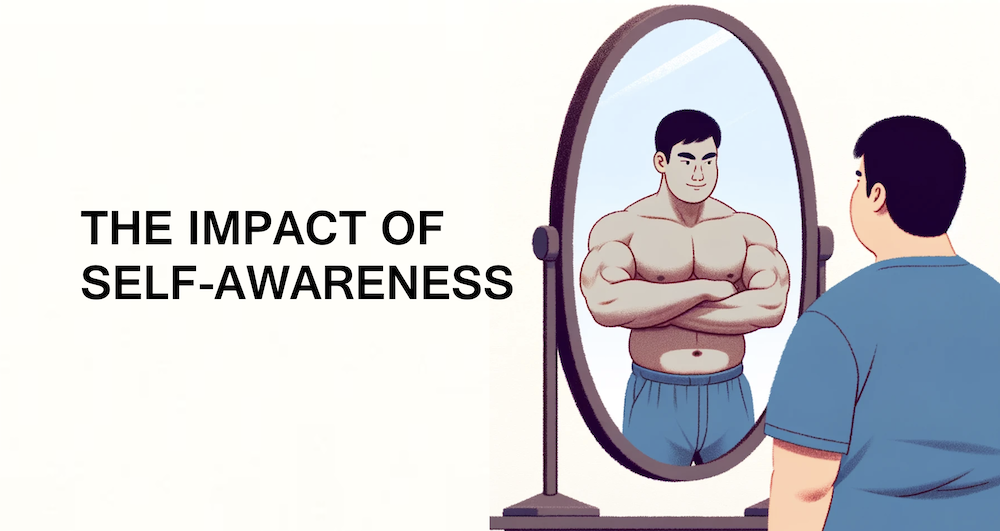
Have you been in conversations criticizing leaders and team members who seemed to have low self awareness? Have you wondered if you could be a conversation topic among your colleagues?
What is the impact if you are a poor observer of yourself?
Consider some of these possibilities when you are a poor observer of self:
▶ You project your anger / insecurities on others
▶ You believe that people must be able to see your point of view and you name it as common sense
▶ You believe you show up with the same level of performance daily and ignore the impact of your moods and emotions
▶ You expect people to live out standards that you can’t
▶ You say “Yes” to one thing without knowing that decision means saying many “No” to other things and vice versa
▶ You have a strong opinion that you put forth as a truth, not knowing that your opinion says more about who you are than the matter itself
The above 6 statements are part of a coaching resource on uncovering blindspots. These are common observations based on more than a thousand hours of coaching practice as an ontological coach.
So why is Self-Awareness so important?
👉🏻You can’t change what you don’t see👈🏻
▶ One of the most transformational experience is to notice the way you see the world or “taking a look at how you look at things”
We need more love, kindness and compassion in this world.
We need more to have greater self awareness in how they are impacting others at home and at work.
We need more consciousness in our families and workplace.
▶ My hope is this article will create some curiosity for yourself - what might be your blindspots?
We invest in different experiences to enrich our lives including spending on traveling, food, adventures.
▶ Coaching is an experience that can be transformational. It is an investment for yourself and your loved ones. Why not consider investing in your growth?
Consider reaching out and scheduling a coaching conversation with me. You will also receive the full resource with 20 statements that shine a light on various areas of blindspots,
Written by Victor Seet
Activator • Communication • Strategic • Self-Assurance • Command
Victor is an accredited ICF Advanced Certified Team Coach (ACTC) and Professional Certified Coach (PCC) based in Singapore. Victor coaches teams to leverage their collective strengths, get clear on ways of engagement and ways of working to strengthen team and interpersonal dynamics. He intentionally integrates the strengths-based approaches and emotional agility into his team and 1-1 coaching and facilitation workshops.

CliftonStrengths: Complementary Partnerships Through Unlikely Pairings - Part 2
Some of the most effective working partnerships come from people whose strengths look nothing alike. Singapore CliftonStrengths coach Victor Seet shares more examples of unlikely but powerful strength pairings in this second instalment of his complementary partnerships series.

This is part 2 of Complimentary partnerships through the unlikely pairs of the CliftonStrengths themes.
The key question asked from the first article was:
“How can people with very different strengths work together?”
I’m attempting to answer the question by examining the polarities that I derive from the unlikely pairs from the list of CliftonStrengths 34 themes. From Gallup’s research data, the unlikely theme pairings which bring insights into polarities are:
1. Deliberative - Woo;
2. Developer - Command;
3. Empathy - Self Assurance;
4. Discipline - Ideation;
5. Harmony - Strategic;
6. Maximizer - Restorative;
7. Positivity - Deliberative.

In this part 2, I will be touching from the fourth to the last pair. I will share my observations of how each theme within the pair has contrasting thinking, feeling and behavioural patterns. I will attempt to name the polarity so that we get an idea why these pairings can be powerfully complementary. Again, these are my own personal views as a coach based in Singapore.
4. Discipline and Ideation
People with Discipline require their world to be predictable. They set up routines and they need precision. They like things to be in order and planned. The need for structure often means they prefer to work within the box and not be taken by surprises. People with Ideation, on the contrary, enjoy newness and seeing things fresh. They are energized by out-of-the-box ideas. Innovative solutions are new perspectives developed on familiar challenges. They are often easily bored by routines and enjoy going beyond previously set parameters to develop fresh ideas and perspectives.
What does this partnership bring out?
The named polarity here is the need for stability AND change. Often, the routines bring a sense of predictability, which in turn, bring a sense of stability and safety. In a country like Singapore where survival is often a key narrative, stability at work is a need that workers require. On the other hand, what workers need and what businesses want creates the tension. Businesses need constant change and innovation to adapt to the dynamic business landscape. People with Ideation brings innovation and fresh perspectives. Leveraging this polarity helps to create a needed dynamic critical to building high performance teams.
5. Harmony and Strategic
People with the Harmony theme look for areas of agreement and consensus. They instinctively listen out for shared points of views. They prefer to help team members find common ground and have a preference for emotional efficiency, even if it means going on a longer route together. The journey towards camaraderie is often more valued than output efficiency. People with Strategic, on the other hand, prefer operational efficiency and having speed. Finding shortcuts is in the DNA. The results are often more valued than the team building process. They seek the path of least resistance and are prepared to rock the boat if they assess that a new path might bring greater results.
What does this partnership bring out?
The named polarity here is the need for emotional efficiency AND the need for output efficiency. To build a sense of togetherness, there is often the need for alignment through some levels of consensus building. Moving too fast without team alignment creates conflicts which in turn creates an emotional state that can be detrimental to team performance. Having the right level of emotional efficiency is helpful.
On the other hand, in the fast moving world of businesses, there is also a need for output efficiency and getting results. Leveraging this partnership allows for constructive exchanges on when it is critical to get buy-in from the team and when it is necessary to act efficiently and with speed to achieve the required outcomes. Leveraging this polarity creates more respect for each other and ultimately creates a stronger bond within the team. .
6. Maximizer and Restorative
People with the Maximizer theme see their world through the lens of excellence and beauty. They dislike mediocrity and being average. To a Maximizer, fixing something that is broken is akin to taking something from below average to average. That process takes a great deal of effort and often does not bring quality results. Maximizer prefers to focus on strengths to enhance quality and create high performance. On the other hand, people with Restorative love to solve problems. They see the world as a broken world and the world can be a better place by solving one problem at a time. Statistically, this pair is also the most unlikely to appear together in an individual’s top 5.
What does this partnership bring out?
The named polarity here is Exceeding Expectations AND Meeting Expectations. Customers are constantly looking for higher levels of quality in products and services and making comparisons. Customers are also ready to complain if the products and services are not up to the committed standards. Leveraging this polarity allows for the delivery of strong business results.
Another possible polarity is building on strengths AND managing weaknesses. Leaders have often seen how a non-performing member pulls down the overall team performance and morale. Managing the weaknesses of team members is part of a key process to build high performance teams. Yet, self-actualization is a powerful driver. The ability to achieve excellence through focusing on our strengths is greatly desired. This polarity creates a powerful partnership in the people development space.
7. Positivity and Deliberative
People with Positivity are generous with praise, quick to smile, and always on the lookout for the positive in any situation. They have the desire to keep environments lighthearted and look to inject vitality and life into areas that feel dead and lifeless. People with Deliberative on the other hand are always on the lookout for danger and what might go wrong. They believe that life is better when expectations are managed well and precautions are well taken.
What does this partnership bring out?
The named polarity here is being optimistic AND realistic. Having an optimistic mindset helps us to have lightness in our approach at work. People with Positivity often draws on this lightness to spread the positive energy around. When team members catch on the positive energy, there are more laughter, a greater sense of psychological safety and more effective collaboration. In times of setback, the positive energy empowers the team to be resilient. On the other hand, having the realistic mindset helps the Deliberative to actively anticipate challenges that might derail the team’s efforts. The realistic mindset often carries a sense of burden which in turn, creates a sharp focus on delivering results. Creating back up plans and planning for worst-case scenarios are the norm.
Leveraging this polarity creates the ability to draw on the lightness to create a positive team spirit and the operational prowess of burden to create focus.
In conclusion: the above examples illustrate how many of the CliftonStrengths themes can be powerfully leveraged. The conflicts in perspectives between the different themes are not problems to be solved. They should be seen as perspectives to be leveraged. Leveraging these polarities can help teams and businesses thrive in this VUCA world.
Written by Victor Seet
Activator • Communication • Strategic • Self-Assurance • Command
Victor is an accredited ICF Advanced Certified Team Coach (ACTC) and Professional Certified Coach (PCC) based in Singapore. He is also a Newfield Certified Ontological Coach and CliftonStrengths Coach. Victor facilitates teams to leverage their collective strengths, get clear on ways of engagement and ways of working to strengthen team and interpersonal dynamics. Victor specializes in integrating strengths-based and ontological approach into his team coaching and leadership workshops. Victor is Director of Coaching and Leadership Development at StrengthsTransform™